Engineering Tools
Four free calculators, no login, no email. They exist because most quotation delays come from a specification that has not been pinned down yet — settle impedance and stackup first and the quote comes back correct the first time.
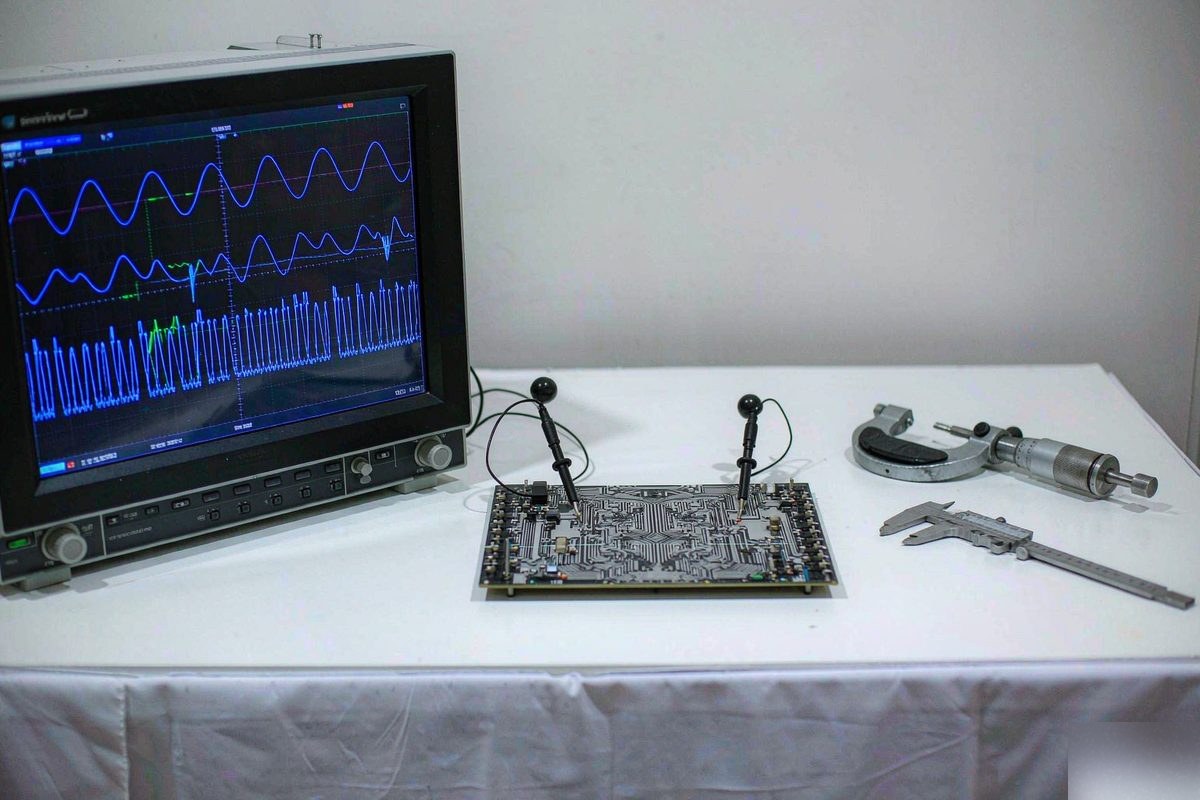
Impedance Calculator
Microstrip, stripline and differential pairs
Stackup Designer
Build and check a symmetric stackup
Copper Current Calculator
Trace width from IPC-2221
PCB Unit Converter
The units that actually appear on drawings
What each tool actually computes
Microstrip, stripline and differential pairs
Enter dielectric height, trace width, copper thickness and Dk. Returns single-ended and differential impedance using the IPC-2141 closed-form expressions, plus the w/h ratio so you know when the formula is out of its valid range.
Build and check a symmetric stackup
Add copper and dielectric layers, set thickness and Dk, and see total board thickness, copper balance and layer symmetry as you go. Catches the asymmetric stackups that bow during reflow and drift in impedance.
Trace width from IPC-2221
Given a current and an allowed temperature rise, returns the required cross-section and trace width for external and internal layers at your copper weight. Also works in reverse: current capacity for a trace width you already have.
The units that actually appear on drawings
mil, mm, µm, inch, oz of copper and AWG, converted both ways. Copper weight is converted to plating thickness rather than treated as a mass, which is where most converters go wrong.
Limits you should know about
Closed-form impedance expressions are accurate to roughly ±5% inside their valid range and drift outside it, which is why each calculator reports the geometry ratio it was given. A calculated value is a starting point for the stackup you send us, not a substitute for impedance coupons on the finished panel. Where a design is marginal, tell us at RFQ stage and we will build a coupon into the panelisation.